

Helix Geospace were in attendance and exhibiting at the European Navigation Conference this week in Vienna.
It was a great event, with an opportunity to learn more from the PNT community and the growing concerns around GNSS reliability in the face of rising interference, as well as providing an excellent opportunity to raise awareness of Helix Geospace and our CRPx GNSS Anti-Jamming solution.
The threat of GNSS jamming is continually rising
Whilst the navigation community have long been aware of the existence of GNSS interference, it's now reached epidemic proportions and requires urgent attention - the European Space Agency - ESA in particular stressed in their opening keynote that implementing GNSS resilience is now a necessity and not merely an option for those critically dependent on GNSS services.
To-date, the GNSS L1 band has been the main target for jammers, hence extending GNSS systems to be multi-band and multi-constellation was often enough to ensure they still have sufficient satellites in view to compute a positional fix. But as noted by the Royal Institute of Navigation (RIN) in their presentation this week, moving to multi-band/constellation 'won’t save you from the jammers', and especially so given that sophisticated jamming equipment supporting all bands and GNSS constellations is now easily obtainable from the Internet, and for only a few thousand dollars.
Dynamic GNSS antennas are the first line of defence
In the face of this threat landscape, it's clear that a cornerstone for resilient GNSS is to combat interference directly at the antenna level, with both ESA and RIN highlighting the important role that controlled reception pattern antennas (CRPA) (such as Helix's CRPx) play in hardening GNSS against jamming attacks.
Neo-PNTs using LEO satellites such as Iridium's STL are also being explored for some applications, but as Iridium noted themselves, the positional accuracy and latency of these systems are no match for GNSS hence will be employed mainly as a fallback for GNSS, not a replacement.
Spoofing is becoming the bigger challenge
These days though, jamming is only one side of the story - many at the conference raised concerns that GNSS spoofing is also on the rise and potentially poses a bigger threat than GNSS denial of service.
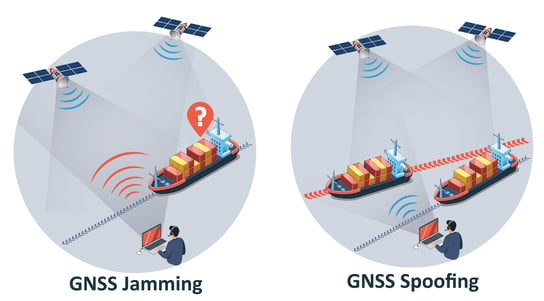 Combating spoofing is not easy, and likely requires a multi-layered approach that 1) hardens GNSS to prevent the receiver losing lock, 2) combines it with anti-spoofing analytics in the GNSS receiver, and 3) leverages authentication capabilities such as those provided by Galileo OSNMA to provide an end-end mitigation strategy.
Analysis of the GNSS signal to identify spoofing is critically dependent on delivering it intact to the GNSS receiver with minimal distortion. Paradoxically though, in mitigating GNSS jamming, many of the CRPAs on the market today distort the GNSS waveform to such an extent that downstream, anti-spoofing algorithms in the GNSS receiver no longer work and often need to be disabled for the receiver to function at all in providing a positional fix. For more details on this issue see our latest blog.
Helix's CRPx is different in this regard, with a unique approach that maintains phase coherence and signal linearity - in short, appearing to the GNSS receiver as a passive and stable antenna, and fully compliant with downstream anti-spoofing algorithms.
Throughout the event, Helix met with a wide range of attendees across both military and civil applications. The response was overwhelming, with great feedback and encouragement, and many also keen to acquire samples for evaluation within their respective use cases.
No doubt we'll be back again next year!