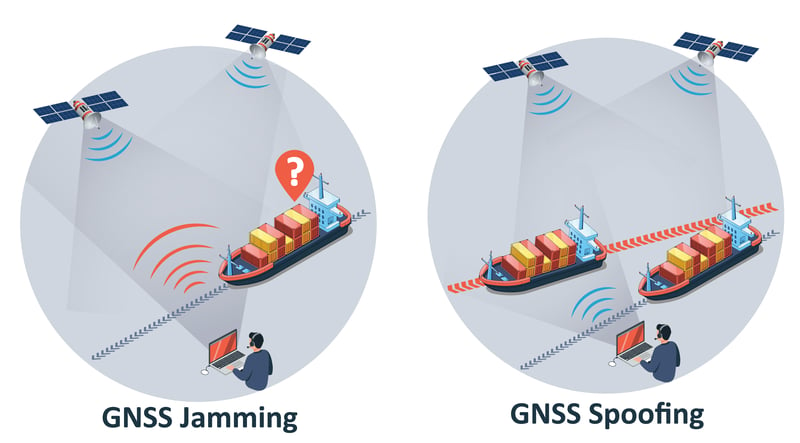
This disruption impairs the ability of the GNSS receiver to calculate position to a good level of accuracy and may even lead to complete denial of service, whilst spoofing will trick the receiver into believing it's somewhere that it's not.
GNSS resiliency is therefore all about finding ways to make the GNSS system (antenna + receiver) more resilient to external interference, jamming and spoofing.
Where can resiliency be improved within a GNSS system?

GNSS receiver
At a basic level, some resiliency measures can be built into the GNSS receiver itself. For instance, notch filtering to detect and remove interfering signals within the GNSS bands.
Good as some of these mechanisms can be, they're no match for sophisticated jammers that are specifically targeted at overcoming the GNSS receiver's resources or saturating its RF front end.

GNSS antenna
In many ways, the GNSS antenna is the best first line of defence against interference and jamming.
A passive horizon nulling antenna such as Helix's HNA is one approach: providing reduced sensitivity to signals at low elevations, thereby blocking out ground-based interference and jammers.
Handling more sophisticated attacks involving numerous mobile jammers and more complex waveforms requires an antenna that can dynamically optimise its reception pattern to neutralise the jammers whilst maximising GNSS signal reception - Controlled Reception Pattern Antennas (CRPAs) do just that; Helix's CRPx is a good example.

GNSS CRPA + receiver
Optimum resiliency can be achieved by combining the two; the CRPA removing interference and jamming to deliver a clean GNSS signal to the receiver. The receiver then employing detailed signal processing to search for and reject any anomalies that might have been introduced via spoofing.
For this to work, it's essential that the CRPA outputs a clean GNSS signal otherwise any artefacts are likely to trigger false-positives. Unfortunately, this is not the case for many CRPAs, their focus on jamming suppression creating anomalies that wreak havoc downstream in GNSS receivers.
Not so with Helix's CRPx which has been specifically engineered to work well with all GNSS receivers and their anti-jamming/spoofing capabilities.
Yes
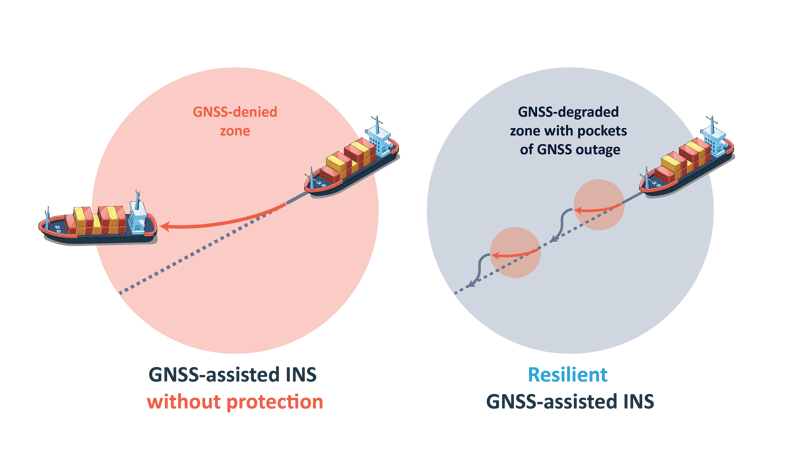
Improving resiliency will reinstate some level of GNSS availability, even in heavily-contested regions, and thereby reduce large zones of GNSS-denial into much smaller pockets of GNSS outage.
The INS component of the system can then 'plug the gap' during these outages, with GNSS position fixes becoming periodically available for resetting the errors accumulating in the INS.
Engineered for a wide range of applications
Maritime
GNSS is critical for navigation in modern maritime operations but increasingly under threat.
Learn more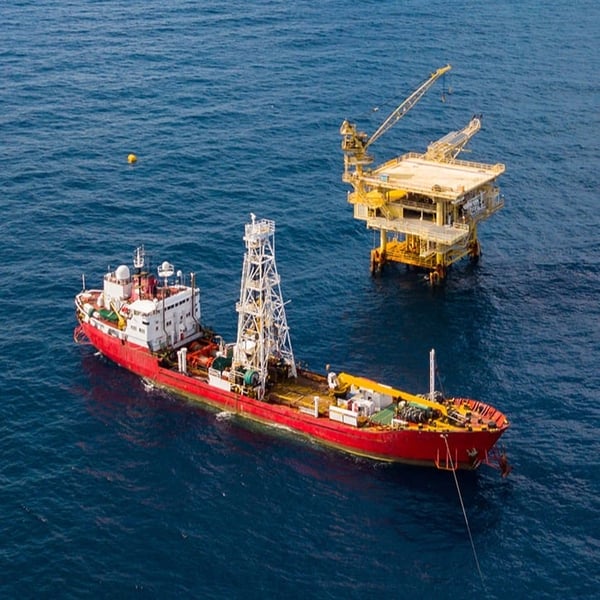
Drones (UAVs)
Resilient GNSS in a compact form factor is fundamental to the operation of drones & UAVs.
Learn more
Military UxVs
Unmanned aerial and surface vehicles (UxVs) are revolutionising modern warfare but crucially dependent on resilient GNSS.
Learn more
Civil Aviation
Mitigating inadvertent GNSS interference from conflict zones is paramount to ensuring the safety of aircraft and crew.
Learn more